


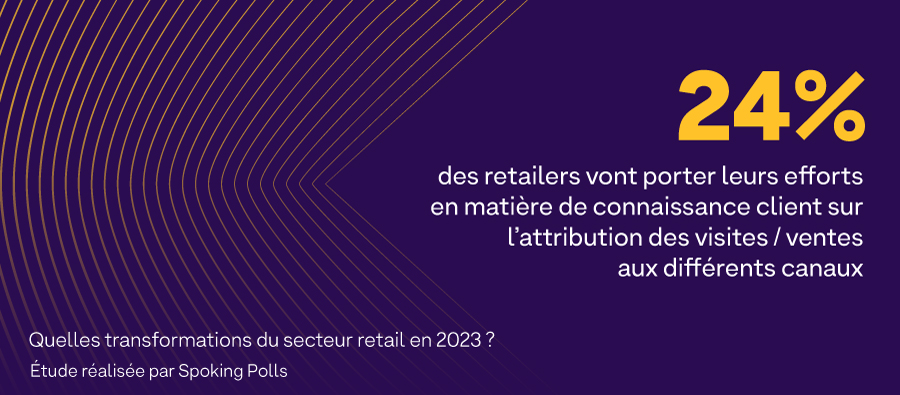
In a recent study published by Dékuple, 24% of retailers believe that the complexity of setting up suitable IT tools is a barrier to using their data, we asked Thomas Zavrosa, Partner in charge of strategic planning at Agence Dékuple, for his view of the situation.
Data collection and analysis have become increasingly important for companies looking to design high-performing marketing campaigns.
Indeed, insights and data have become essential for companies, enabling them to better understand consumers, market trends and growth opportunities. Marketing decision-makers can thus take better-informed decisions and develop more effective strategies because they genuinely resonate with their consumers’ expectations. However, the complexity of setting up the tools can indeed be a challenge for retailers, particularly those that lack the resources or expertise in-house. According to the Dékuple x Spoking Polls study, 24% of retailers believe that the complexity of setting up suitable IT tools is a barrier to using their data. This clearly shows retailers’ desire to make the most of their data, but also the difficulty of making it easier to process with suitable tools.
However, many tools are available to help brands implement their marketing strategy.
Strategic planning is the first step in designing an effective marketing programme. At Agence Dékuple, we enrich this work with data. Insights and data provide a solid basis for understanding the preferences, behaviours and needs of target audiences. Data analysis also makes it possible to identify emerging trends and growth opportunities, enabling companies to develop marketing campaigns that are both creative and relevant, helping them achieve their commercial objectives.
Social listening and data profiling are two valuable tools for marketing decision-makers. Social listening involves analysing online conversations to understand consumers’ opinions, attitudes and behaviours. Data profiling, for its part, consists of collecting data on consumers, such as their preferences, purchasing behaviour and online habits. This information allows companies to create detailed consumer profiles or “personas” and to adapt their marketing strategy accordingly. Having brand experts, the strategic planners, work directly with this data leads to recommendations that are actionable, inspiring and effective.
Finally, geotargeting makes it possible to target advertising or marketing campaigns according to consumers’ geographical location. Thanks to geolocation, companies can create personalised campaigns based on consumption habits, purchasing behaviour and consumer preferences in their region. This increases campaign performance by making them more relevant to the target audience.
In summary, although the complexity of setting up IT tools may be a barrier to using data for some retailers, there are strategies for overcoming this challenge. By assessing needs, investing in training and expertise, building strategic partnerships and simplifying processes, retailers can fully exploit the potential of their data to improve their performance and decision-making.