How will retail companies adapt to new consumer habits?

How will retail companies adapt to new consumer habits?

  • Ingénierie Marketing

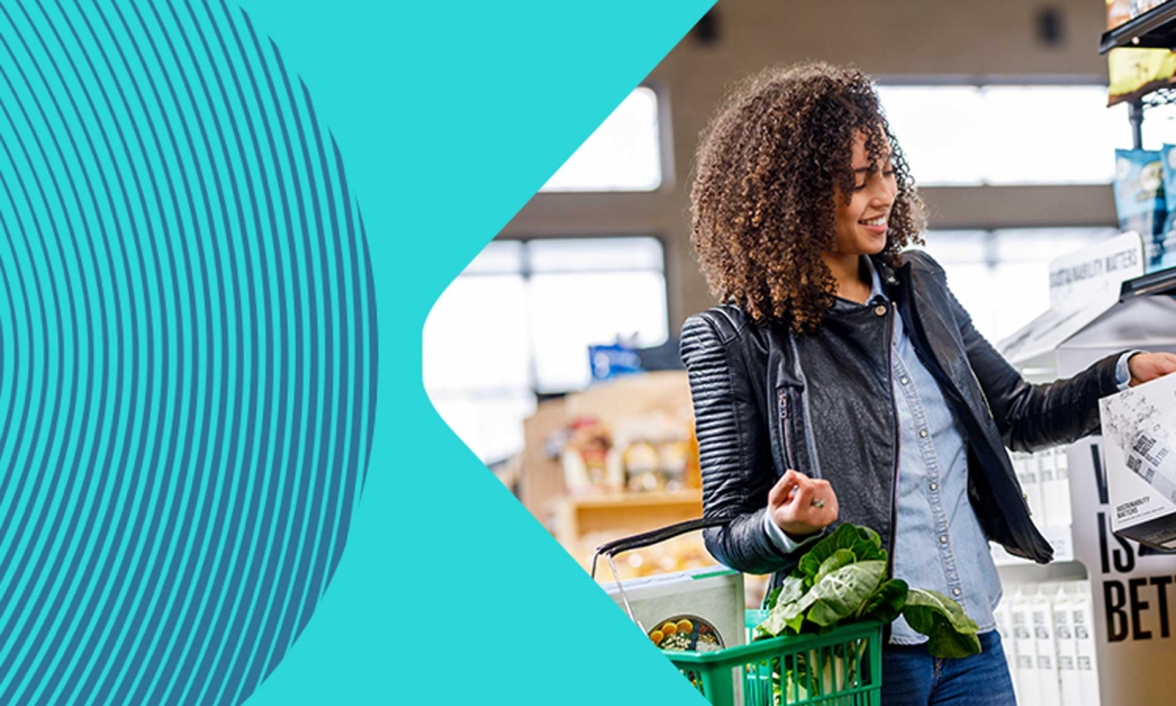
For many sectors, the year 2020 was marked by a series of considerable transformations. The health crisis, which led to the closure of many shops, had a strong impact on sales and on consumer behaviour. Consumers have adopted new consumption habits that will last.
In the retail sector, the crisis was an accelerator of major trends that were already emerging. Retailers had to show agility to meet their customers’ expectations. The key to this agility: digital and data.


The express digitalisation of sales and customer relations has indeed revealed opportunities, and challenges, for the sector, which has had to and will have to, in future, make physical points of sale and e-commerce coexist harmoniously. A single watchword for the future: omnichannel.


What are the new opportunities and challenges linked to this e-commerce boom?


Digital and physical: a logistics challenge

If the retail sector managed to hold its own during the crisis, it is notably thanks to the rise of online sales. Drive, home delivery and click and collect made it possible to continue to satisfy customers concerned about health issues. As a result, it was the company’s logistics side that was put to the test, since the question was how to quickly offer the right products, at the right time for the customer, and via the right delivery method.
Besides these phenomena, the supply chain was disrupted, as some non-essential purchases were shifted to others (food, DIY, leisure…), giving rise to delivery problems or stock shortages.


It is the agility of retailers that will make the difference. Companies must have a clear, real-time view of their supply chains, in order to control stock. But this will above all be possible through the information gathered thanks to the increase in data collection made possible by the e-commerce boom.
Companies have indeed been able to learn more about their customers’ consumption habits, and about the ways to stay in touch with them. This data, more precise than ever, will make it possible to forecast, anticipate and be more responsive to the various demands.

This abundant data is therefore an opportunity made possible by the digital interactions between brands and consumers. It has enabled players that had not yet done significant collection work to create a genuine customer database, and has enabled the others to continue collecting data and to refine it even more precisely. It is a real asset for the future insofar as retailers will need this data to continue to satisfy their customers. But above all, in an omnichannel approach, to succeed in targeting customers in a relevant way and getting in touch with them via the right channels.

Redefining the role of the shop

Digital has therefore taken on a new role, and this role, even though shops have started operating again, will last. The shop will necessarily also have to take on a new one. The question will no longer be to compartmentalise physical sales and digital sales, but rather to identify the strengths of each, and to ask how the two, combined, can benefit sales. Thanks to the observations made during the lockdown periods, players in the sector will thus have to take advantage of the strengths of points of sale (immediate purchase, direct advice), and the advantages of digital (health safety, a smooth purchasing journey…).

According to a recent study by Budget Box and Harris, in the retail sector, 50% of customers are omnichannel, and these customers spend on average 69% of their budget in shops, and 31% in distance selling. Consumers thus vary the channels, but do not use them all in the same way. It is necessary to succeed in offering them a seamless journey that will meet their expectations.

Customers who have adopted these new digital methods will keep them well after the health crisis. It is essential to rethink omnichannel journeys in order to adapt to them and foster the interaction between physical and digital.
But in a very unstable and constantly moving environment, all of these elements will only be possible if companies equip themselves with new analytical capabilities in terms of volume, both internally and externally.

children’s magazines, a driver of encouragement to read in their own right

children’s magazines, a driver of encouragement to read in their own right

  • Solutions abonnements

Just as Emmanuel Macron has launched the “national cause” Reading Plan and the Partir en Livre operation begins on 30 June, the ADLPerformance Group, the leader in press subscription sales in France – thanks to a portfolio of nearly 3 million subscriptions – provides an insightful perspective on the consumption of children’s magazines through the 70 titles it distributes.

To find out more about the role played by children’s magazines, a driver of encouragement to read in their own right, I suggest you speak with Nancy Faure, Managing Director of the Press Division of ADLPerformance.

Some general figures on the “children’s” magazine reading market:

– 1 million readers aged 1 to 18.
_ 86% of children’s magazine circulation is by subscription.
_ Young people discover magazines very early, and the vast majority of them read at least one children’s magazine during the year: 84% of 1-6 year-olds and 81% of 7-12 year-olds.
– Children mention discovery and the pleasure of learning first and foremost, at 42%.

The latest figures published by the ADLPerformance Group reflect this enthusiasm:

+27% for magazines aimed at children under 7 in the 2nd half of 2020 vs the 2nd half of 2019
+16% for magazines aimed at 7 to 13 year-olds in the 2nd half of 2020 vs the 2nd half of 2019

All neurologists extol the virtues of reading magazines from the earliest age. Parents (and grandparents!) have understood this, since the “Children’s magazines” category has a very strong market share, in normal times, among the different categories of magazines offered to the public by ADLPerformance. What is interesting to observe is that the period we have been through has increased tenfold the subscriptions to children’s titles. Families particularly wanted to steer their children away from screens. And the measures proposed by the government aim to make this trend lasting.

The ADLPerformance Group has been involved for nearly 50 years in the distribution of these children’s magazines through various activities, and notably by forging partnerships with major brands (banking, retail, etc.), which wish to strengthen their customers’ loyalty by capitalising on the unique emotional bond that magazines create. Building on this enthusiasm for children’s magazines, the Press Division of ADLPerformance has also recently put in place a unique “Back to school” marketing scheme that enables a brand to promote magazines to young people (parents!).

DATAFORGENEROSITY MAXIMISES DONATION ACQUISITION CAMPAIGNS FOR THE CHARITY AND NON-PROFIT SECTORS

DATAFORGENEROSITY MAXIMISES DONATION ACQUISITION CAMPAIGNS FOR THE CHARITY AND NON-PROFIT SECTORS

  • Ingénierie Marketing

Dékuple (formerly ADLPerformance), a French group expert in cross-channel data marketing, and Intelligence Senior, a media, data and consulting group specialising in the Silver Economy, (in which the Dékuple Group holds a stake) are combining their expertise to launch a new offering aimed at the charity and non-profit sectors, called DataForGenerosity.


The aim is to support these organisations in acquiring new donors, particularly seniors, and retaining them, thanks to a geomarketing solution with unrivalled precision in terms of geographic targeting and donor profiles. Indeed, people over 50 represent 47% of the French population, of whom 52% are donors[1]. DataForGenerosity delivers an average improvement of 20% to 45% in marketing campaigns.


Six months after the ADLPerformance Group took a stake in Intelligence Senior, the launch of DataForGenerosity makes this rapprochement a reality, an offering that capitalises on both:

  • The data tools of the ADLPerformance Group, notably including the Family Square offering
  • The sector expertise and marketing know-how of the teams at Intelligence Senior


“ We know that the context is very particular for players in the charity sector. Between the health crisis, the digitalisation of donations, and the ageing of their donor bases, many charities are facing a real challenge, explains Adrien Bouvier, founder of Intelligence Senior.  And I believe that the offering developed with the ADLPerformance teams responds perfectly to these challenges ”.


“When you know that the month of December alone accounts for more than 55% of the year’s donations, we are convinced that our approach can effectively support players during this pivotal period of the year ”, adds Stéphane Bernal, E-Data Director at Dékuple.


DataForGenerosity is built around 3 fundamentals : analysis, creation and distribution


  • Analysis of the charity’s or non-profit’s database in order to better understand the profile of its donors (socio-professional category, rurality, etc.) and determine the most represented ones
  • Creation of acquisition campaigns and mechanisms tailored to the people identified during the analysis
  • Ultra-precise distribution of content thanks to targeting on the media of Intelligence Senior (5 million readers) and on the direct marketing solutions of ADLPerformance, including sophisticated performance management (lead heat score, PRM funnel, etc.)


Like companies that must constantly adapt and personalise their communication in order to acquire new users while retaining them, the charity sector has everything to gain from knowing its donors better, the reasons for their donations and the channels to favour for engaging with them. Studies show that companies that carry out advanced analysis of their customer databases improve their ROI by +115% and achieve +93% in profit[2].


DataForGenerosity therefore perfectly combines the advantages of the power of Data with the sector’s specific and very “human” marketing know-how, all with simple and clear implementation schemes for partners in the charity or non-profit sector.


About Intelligence Senior

Intelligence Senior (formerly Groupe Grand-Mercredi) has been developing media and services for businesses targeting the senior market in France since 2015. The company now brings together more than forty “young” employees, all convinced by the potential and appeal of the over-50s target.

It is through its resolutely modern, pragmatic approach, which already places digital and data at the heart of its thinking, that Intelligence Senior has built a reputation as a marketing and sales expert on senior issues among more than a hundred companies across all sectors of activity. Since March 2021, the ADLPerformance Group has held a stake in Intelligence Senior.


About the Dékuple (formerly ADLPerformance) Group

Dékuple, a group listed on NYSE-Euronext Paris since 1998, specialises in data marketing services. Driven by more than 600 employees, this group is a major player in cross-channel marketing in Europe. It is present in France, Spain and Portugal. For 49 years, it has supported its key account clients on marketing issues. The group now works with two thirds of CAC 40 companies and numerous mid-sized companies. Dékuple generated revenue of nearly €139.3 million in 2020.

Opinion piece: Why data is an ecological factor in reducing marketing pressure in acquisition!

Opinion piece: Why data is an ecological factor in reducing marketing pressure in acquisition!

  • Ingénierie Marketing
  • RSE

At a time when there is a great deal of talk about digital ecology, let us talk a little about the positive ecological impact of data in its marketing use.

Every day, consumers are confronted with thousands of marketing messages. And we are seeing growing vigilance, not only among consumers but also among responsible brands, regarding the marketing pressure being exerted. It is becoming obvious to everyone that “carpet bombing” is no longer acceptable.

The GDPR, which came into force in 2018, sometimes led to radical and exaggerated decisions to halt marketing campaigns, particularly in acquisition, and was seen by many marketers as a restriction of freedom.

Furthermore, since 2018, many issues linked to ecology and to the impact of this marketing pressure on the environment have also emerged. More and more laws and legal mechanisms, such as “stop pub” or “Bloctel”, govern marketing activity. And the question of the ecological footprint of communication, marketing and digital is on legislators’ worktable.

But where marketers might think that their room for manoeuvre is shrinking, it is possible to envisage a reasoned use of data that allows a more ethical and more ecological approach to acquisition marketing and marketing pressure, while remaining focused on performance and maximising ROI.

IMPROVING TARGETING AND DEVELOPING A REASONED APPROACH

We spoke of data mining for a long time before speaking of data science. Because data is a gold mine!

Consumer data naturally holds information on usage, needs and expectations. And this data, even when anonymised, provides valuable information that makes it possible to segment and target judiciously.

Platforms are also very useful providers of information. With its 2.74 billion monthly active users, Facebook undoubtedly has one of the largest qualified databases in the world and is a veritable reservoir of insights. Audience profiling on Facebook data thus takes into account a set of sociodemographic and behavioural data, making it possible to refine one’s acquisition strategy and to target only a relevant audience.

Finally, open data is also a good complement for providing useful data. For example, by using particularly fine targeting methods such as grid squares, which consist in dividing the territory into very precise small geographical zones, it is possible to obtain information on household types and to carry out geomarketing actions that target the population best suited to an offer.

All of this data allows brands to spot business opportunities and to take a more reasoned approach by avoiding exposing their messages to irrelevant targets. Because data provides more precise indications on how to deploy one’s resources wisely, on the right levers, and therefore on how to target more finely, which addresses both economic and ecological concerns. Overall, this delivers greater efficiency of acquisition marketing programmes, better profitability of marketing operations and, ultimately, a better return on investment.

ADAPTING YOUR OMNICHANNEL APPROACH AND ADOPTING A RESPONSIBLE METHOD

Companies have understood this well: omnichannel has become indispensable to any marketing strategy. Indeed, 1 in 2 French people is an omnichannel consumer. Being omnichannel could push brands to be everywhere all the time. But it is now necessary to take a pragmatic and objective approach to omnichannel journeys. Because channels, however numerous they may be, must be used judiciously throughout the customer journey, in a resolutely customer-centric approach.

Indeed, beyond the principle of mixing channels with a view to performance and customer satisfaction, the question of the relevance of those channels is essential to a more responsible and more ecological approach. Here too, data supports decision-making when choosing certain channels over others. In fact, companies can thus adapt their contact methods to consumers’ habits.

DATA IS THE KEY TO EFFICIENT, ECOLOGICAL MARKETING

Today, it is possible to analyse the results of marketing campaigns very precisely. This information makes it possible to measure, adapt and modulate the actions carried out, the idea being of course to achieve a better ROI, but also to optimise resources by highlighting what works and, conversely, what does not, in order to find alternatives.

From now on, thanks to data, every marketer has the means to combine a performance-driven marketing logic with more customer-centric, more ethical, more responsible and more ecological actions.

Quality Education: our partnership with the My Job Glasses platform

Quality Education: our partnership with the My Job Glasses platform

  • RSE

As part of our partnership with My Job Glasses, discover the conversation between Emilie Korchia, co-founder of the platform, and Marie-Laure Ricard – Brilhaut, Group HR Director at Dékuple (formerly ADLPerformance)

My Job Glasses is a platform that connects young people aged 15 to 30 with professionals from all sectors, to guide them or reassure them in  their career choices

The partnership is part of one of Dékuple’s (formerly ADLPerformance) 4 sustainable development goals: Quality Education.

More than 50 employees have volunteered to support the platform’s users.

“We have a role to play with young people, to introduce them to professions and career paths they are not familiar with, or to help them when they are torn between several courses of study”

In the video:

? The creation and purpose of My Job Glasses
? The reasons behind the platform’s partnership with the Dékuple Group (formerly ADLPerformance)
? A review of the first 5 months of the partnership

Interview: what are the new challenges linked to the e-commerce boom in the mass retail sector

Interview: what are the new challenges linked to the e-commerce boom in the mass retail sector

  • Groupe

The crisis has profoundly changed consumer habits. And more than ever, the boundary between physical and digital stores is blurring.

In the mass retail sector, players must understand and adapt to these new habits.

In these two videos, Raphaël Fétique, co-founder of the Converteo consultancy, and Stéphane Bernal, e-data director at Dékuple (formerly ADLPerformance), talk about the opportunities, and conversely the problems, that followed the reopening of stores.


Discover:

– Some figures on the mass retail sector

– The new trends emerging

– Advice on adapting to these new developments

"Faced with all the new issues linked to the closure of stores (logistics, data, cross-channel), new analytical capabilities are needed in terms of volume"

Raphaël Fétique, Co-founder of Converteo


To find out more, you can download our white paper:  Mass retail: understanding the new challenges of the sector to redefine your omnichannel strategy.

10 years of partnership with the ONF, worth celebrating

10 years of partnership with the ONF, worth celebrating

  • RSE

10 YEARS OF PARTNERSHIP WITH THE ONF, WORTH CELEBRATING

“The Dékuple Group (formerly ADLPerformance) has long been committed to environmental issues. The reasons for this commitment are a desire to preserve nature for future generations. By limiting and recycling waste, preserving energy resources, and preserving natural resources”

On the occasion of the 10-year partnership with the ONF, we invite you to look back at the issues and objectives of this collaboration.

? Watch the video conversation between Frederique Lecomte, Director of the ONF endowment fund, Agir pour la forêt, and Marie-Laure Ricard, Group Human Resources Director at Dékuple (formerly ADLPerformance)

ONF

Interview: do paper flyers and catalogues have a future?

Interview: do paper flyers and catalogues have a future?

  • Groupe

Today, with the growing prominence of CSR issues and the upheavals brought about by the Covid crisis, the question of the future of paper flyers and catalogues is arising more and more.

In the mass retail sector, where paper is still a real marketing lever, it is necessary to clarify the role of the flyer and the catalogue, to see more clearly which alternatives to put in place.

In this video, discover the opinion and advice of Raphaël Fétique, co-founder of the Converteo consultancy


"It is important to run tests with well-defined objectives in order to find alternatives"

Raphaël Fétique, Co-founder of Converteo


To find out more, you can download our white paper:  Mass retail: understanding the new challenges of the sector to redefine your omnichannel strategy.

Interview: How to support the gradual return of customers to stores?

Interview: How to support the gradual return of customers to stores?

  • Groupe

In a post-Covid period, what is the role of the physical store?

In the mass retail sector, consumption habits have been greatly disrupted and digital has been able to ensure the continuity of customer relations and sales.

The question now arises of the added value of the store for its customers, in the face of digital, which has been a real support for retail brands.

In an omnichannel approach, what will be the roles of the store and of digital?

What new products and services will the latter bring to consumers?

Some answers from Raphaël Fétique, co-founder of the consultancy Converteo.

"We saw that during lockdown, digital did a great deal. It ensured the continuity of sales in a context where stores were closed. With stores reopening, and digital having taken on a new role, the role of the store needs to be clarified"

Raphaël Fétique, Co-founder of Converteo


To find out more, you can download our white paper:  Mass retail: understanding the new challenges of the sector to redefine your omnichannel strategy.

Dékuple (formerly ADLPErformance) launches Family Square, a geomarketing solution of unrivalled precision delivering 15% to 60% additional profitability on marketing campaigns

Dékuple (formerly ADLPErformance) launches Family Square, a geomarketing solution of unrivalled precision delivering 15% to 60% additional profitability on marketing campaigns

  • Ingénierie Marketing

Based on a postal or email address, and thanks to unrivalled geographic targeting precision, Family Square delivers a 15 to 60% improvement in the profitability of marketing campaigns aimed at acquiring new customers, retaining them, or supporting the development of new points of sale. Indeed, this new solution makes it possible to implement fine geomarketing targeting and more precise profile targeting, and thus helps companies concentrate their efforts on the populations most receptive to their offer, or adapt their messaging to profiles. 

To do so, Family Square classifies French households into 9 families and 23 sub-families, relying on the grid-square approach, a statistical division of France into 2.3 million squares of 200m x 200m, enriched with INSEE data with a minimum of 11 households (90% contain an average of 40 households).


“ Today, digitalisation and omnichannel are making the analysis of consumer behaviour increasingly complex. While companies often have a wealth of information on their customers, they do not always have the instructions to decipher and anticipate their behaviour. With the creation of this new Family Square solution, we intend to provide a clear view of consumers to the companies we support with their marketing strategy challenges ”,

explains Claude Charpin, Managing Director of the Marketing Services France Division of the Dékuple Group (formerly ADLPerformance).


A new solution that addresses the challenges of targeting relevance and profitability

Companies that carry out advanced analysis of their customer database improve their ROI by 115% and achieve revenues that are 93% higher. These results corroborate the finding that 44% of consumers find it useful for products or offers to be selected for them based on what the company knows about them.


“ The performance observed across the many marketing campaigns we run for brands delivers a lift of at least 15% and can reach up to 60% on the best operations ”, adds Claude Charpin.


Family Square works along 3 main axes : acquisition, retention and point-of-sale development

  • For acquisition, Family Square makes it possible to identify and target the prospects most likely to respond to marketing offers, to win “ twin ” prospects of the most profitable customers and to identify cross-channel opportunities.
  • For retention, Family Square makes it possible to adapt one’s communication strategy to different customer profiles and to optimise marketing investment, to target and segment retention and acquisition actions, and to identify the customers who respond best to different offers.
  • For points of sale, Family Square makes it possible to analyse the best possible locations.


Family Square has multiple applications : improving knowledge of customers and prospects, adapting one’s offer, service or channel, carrying out market studies, and optimising geomarketing operations.